From Traditional ATS to AI ATS: The Evolution of Applicant Tracking Software
February 27, 2026
AI ATS platforms use AI artificial intelligence, AI applicant tracking software, and AI agents ATS to automate candidate sourcing, screening, and hiring decisions. By integrating CRM and AI, asset management AI, and marketing automation artificial intelligence, modern AI recruitment software improves hiring speed, accuracy, and candidate experience while reducing manual workload for HR teams.
Hiring has become one of the most data-intensive and competitive business functions. Traditional applicant tracking systems (ATS) were designed to store resumes and manage applications, but they struggle with scale, speed, and candidate expectations. AI ATS platforms solve these challenges by embedding AI artificial intelligence and AI agents ATS into recruitment workflows. This evolution transforms ATS from passive databases into intelligent hiring systems that automate decisions and improve hiring outcomes.
AI applicant tracking software is an advanced recruitment system that uses machine learning, automation, and AI agents to manage the entire hiring lifecycle.
Unlike traditional ATS, AI ATS platforms analyze candidate data, predict job fit, and automate repetitive recruitment tasks. These systems continuously learn from hiring outcomes to improve accuracy.

Traditional ATS systems were built for compliance and record-keeping. AI ATS platforms are built for decision intelligence.
Recruitment complexity has increased due to remote work, high application volumes, and skill shortages.
Key reasons AI ATS adoption is accelerating:
AI ATS platforms address these challenges with automation and intelligence.
AI ATS platforms rely on multiple AI technologies working together.
Machine learning analyzes resumes, job descriptions, and hiring outcomes to improve match accuracy.
NLP enables AI ATS systems to understand resumes beyond keywords.
AI agents automate screening, interview scheduling, and recruiter workflows.
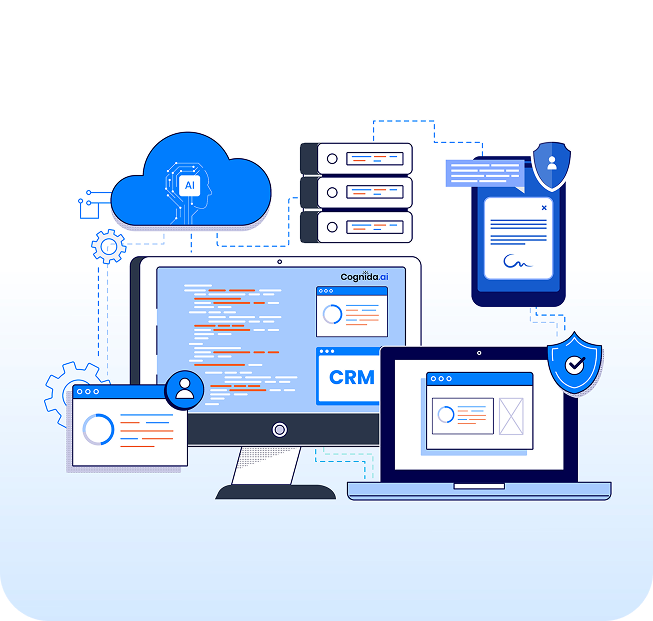
Modern AI ATS platforms connect with AI recruitment software, CRM and AI, and asset management AI tools.
Innovation in AI ATS focuses on autonomy and predictive hiring.
Key trends shaping AI ATS:
These trends reduce time-to-hire and improve candidate quality.
AI ATS platforms deliver value across industries and hiring models.
Common use cases:
AI ATS platforms create measurable improvements across hiring operations.
Key benefits include:
AI ATS implementation requires strategic planning.
Common technical risks:
Mitigation requires governance, monitoring, and continuous optimization.
High-performing hiring teams follow structured adoption strategies.
The evolution from traditional ATS to AI applicant tracking software marks a fundamental shift in recruitment. By combining AI artificial intelligence, AI agents ATS, and automation, modern AI ATS platforms transform hiring into a predictive, scalable, and candidate-centric process.
As hiring continues to intersect with CRM and AI systems, asset management AI, and marketing automation artificial intelligence, intelligent ATS platforms will define recruitment success.
To modernize your hiring strategy and automate recruitment workflows, contact kivo.ai today and explore how AI ATS can transform your talent acquisition process.
AI ATS is applicant tracking software that uses AI artificial intelligence to automate resume screening, candidate ranking, and hiring workflows.
AI agents ATS autonomously manage screening, scheduling, and candidate communication using real-time recruitment data.
Yes. AI ATS provides predictive insights and automation, while traditional ATS focuses on data storage and manual processes.
Yes. AI ATS platforms integrate with CRM and AI tools to build long-term talent pipelines.
When properly trained and monitored, AI ATS can reduce bias by focusing on skills and performance data.
Yes. Platforms like kivo.ai are designed to scale securely across high-volume and complex recruitment environments.
.svg)


Sign up today for hints, tips and the latest product news


